crawl ratio        = first gear x transfer-case low x axle ratio   (graded at two decimals, as printed)
rating             under 30 Poor   30-49 Fair   50-69 Good   70-99 Very Good   100 and up Excellent

travel per engine revolution = pi x tire diameter / crawl ratio
crawl speed (mph)  = idle RPM x travel per revolution (in) x 60 / 63,360
crawl speed (km/h) = mph x 1.609344
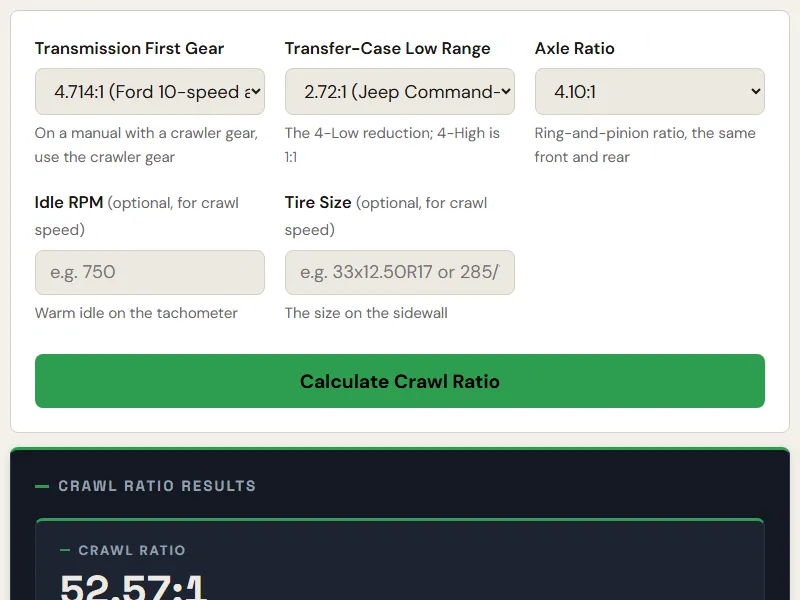
Crawl ratio is the total gear reduction between the engine and the wheels in the lowest gear the vehicle has: first gear in the transmission, low range in the transfer case, and the ring and pinion in the axles. Each one multiplies the last, so a 4.714 first gear, a 2.72 low range and 4.10 axles turn the engine 52.57 times for every turn of the tires. That is the number MetalCloak’s crawl ratio guide uses: transmission low times transfer case low times axle ratio.
A higher number means more control. The more the engine turns per turn of the wheel, the slower the vehicle creeps at idle and the more torque reaches the tires, so you can climb a ledge or ease down a step without riding the brakes or slipping the clutch. MetalCloak rates under 30:1 as Poor (street and highway), 30 to 49 as Fair (trail riding), 50 to 69 as Good (moderate rock crawling), 70 to 99 as Very Good (technical rock crawling), and 100:1 and up as Excellent (extreme rock crawling). The calculator rounds the ratio to two decimals and rates that figure, so the number on screen and the rating always agree: 49.99:1 is Fair, 50.00:1 is Good.
Crawl speed comes from the tire. Every engine revolution turns the tire by one over the crawl ratio, so the ground covered per engine revolution is the tire’s circumference divided by the crawl ratio, the same figure MetalCloak’s calculator shows. Multiply by idle RPM and 60 minutes, then divide by 63,360 inches in a mile, and you have the speed the vehicle creeps at idle in first gear and 4-Low. The calculator uses the nominal diameter printed on the sidewall. A loaded tire squats a little shorter than that, so the real speed is slightly lower.
Bigger tires undo some of the gearing. The crawl ratio itself depends only on the gears, but a taller tire covers more ground per turn, so the same ratio crawls faster on 35s than on 31s. That is why regearing usually follows a big tire upgrade. The gear ratio calculator finds the axle ratio that brings back your stock gearing after a tire change.
Use the factory figures. Ford and Stellantis publish first-gear and low-range ratios on their spec sheets, and the presets in the calculator are copied from them. When your transmission or transfer case isn’t listed, pick Other and enter the ratio from your own spec sheet, owner’s manual or the tag on the case.